Eagle AI
Turning fleet-tracking chaos into a single, AI-powered view of what actually needs attention, so a fleet manager knows what's on fire without opening five tabs.
Role
Lead Designer
Company
LocoNav
Scope
Research → 3 iterations
Platform
Web · Fleet ops
01, Where it began
Cheaper only gets
you so far.
LocoNav's core value prop was simple: cheaper than the rest, with features that matched the bigger offerings. But "cheaper" isn't a moat, and we were up against players with serious pedigree.
Gurtam has been at this 25+ years. Samsara is a decacorn. Fleetio and Motive were polished and well-funded. So the real question driving this project was blunt:
What makes us different? What makes us better?
The field
02, The problem
What we could
solve for users
Managers of large fleets struggle to pinpoint the specific vehicles they actually need to monitor.
Users find it hard to analyze and understand vehicle stoppages effectively.
Poorly-configured accounts either miss crucial alerts or drown in unnecessary notifications.
Users struggle to extract meaningful insight from the platform's existing features.
Smaller teams find it hard to maintain and update trips, geofences and routes.
02, Research
How we found the problems
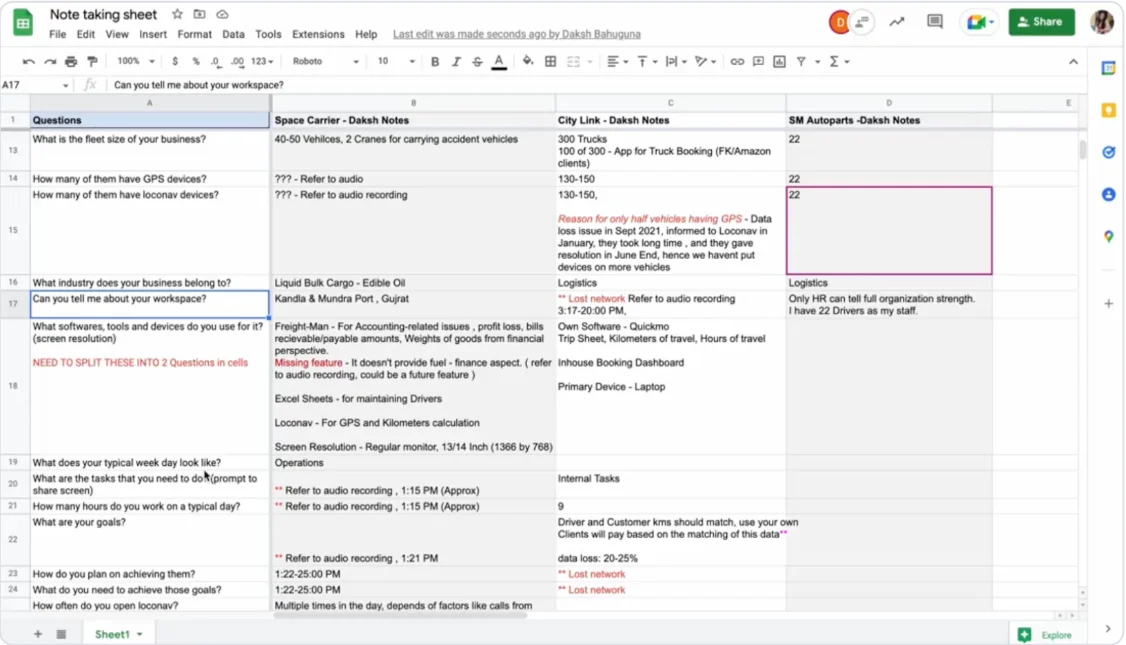
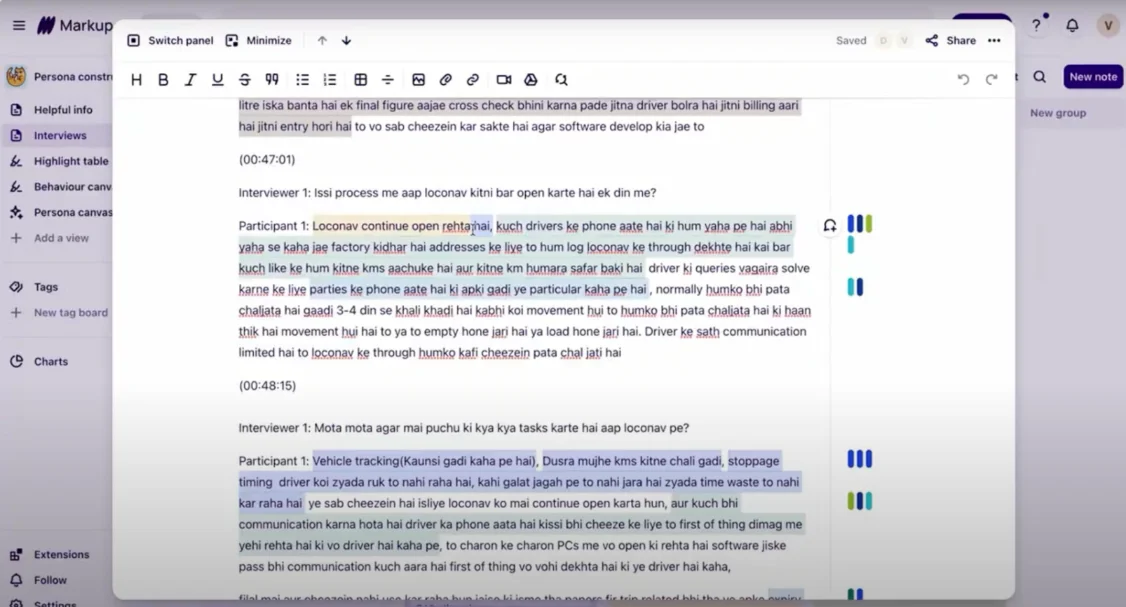
We spoke to 3–4 clients every week for 5–6 weeks, a structured regime with the user base split into groups by fleet size.
We watched how clients actually used the platform, screen by screen, to see where they got stuck.
We measured which features were used and which reports and alerts users cared about most.
Iteration 01
Heat maps
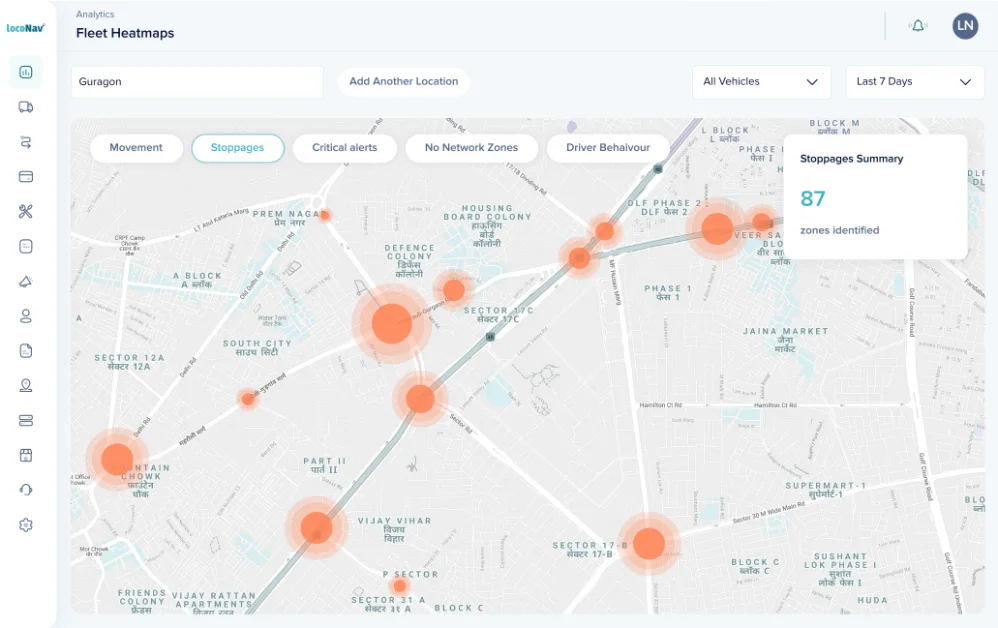
For the first phase we zeroed in on the cornerstone of fleet tracking, locations, and the elements that matter around them: stoppages, movements, critical alerts, no-network zones and driving behaviour. The approach: generate heat maps from all of it.
The catch
The heat maps looked great, but we discovered the strategy failed to address the majority of the user's actual pain points. Pretty, not useful.
Iteration 02
Stoppage analytics
We'd found a good way to present the data, but a sharper question emerged: how do users actually extract value from it? The heat-map prototype revealed a strong appetite for deeper insight into stoppages.
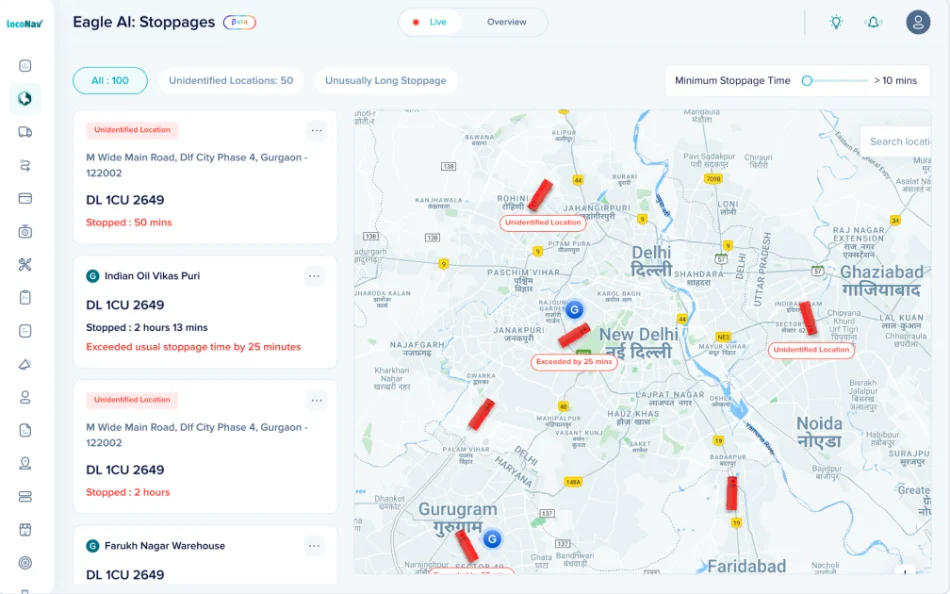
“Stoppages can make or break my fleet's revenue.”
- Client. That's when we knew we were pointed the right way. We began classifying the stoppages users saw as safe vs problematic, delivered value there, then expanded to the other problem statements.
Iteration 03, the product
Meet Eagle AI
By pairing our data with pattern recognition and machine learning, we turned raw tracking into decisions, taking real weight off a fleet manager's day. Eagle AI enables:
Precise identification of the stoppages that actually matter.
Accurate, low-effort geofencing for users.
Recognised through comprehensive trend analysis.
Better trip routes plus proactive route-deviation alerts.
Tighter security, better fuel efficiency, more EV range and time-based ops.
Visuals
Attention, on purpose
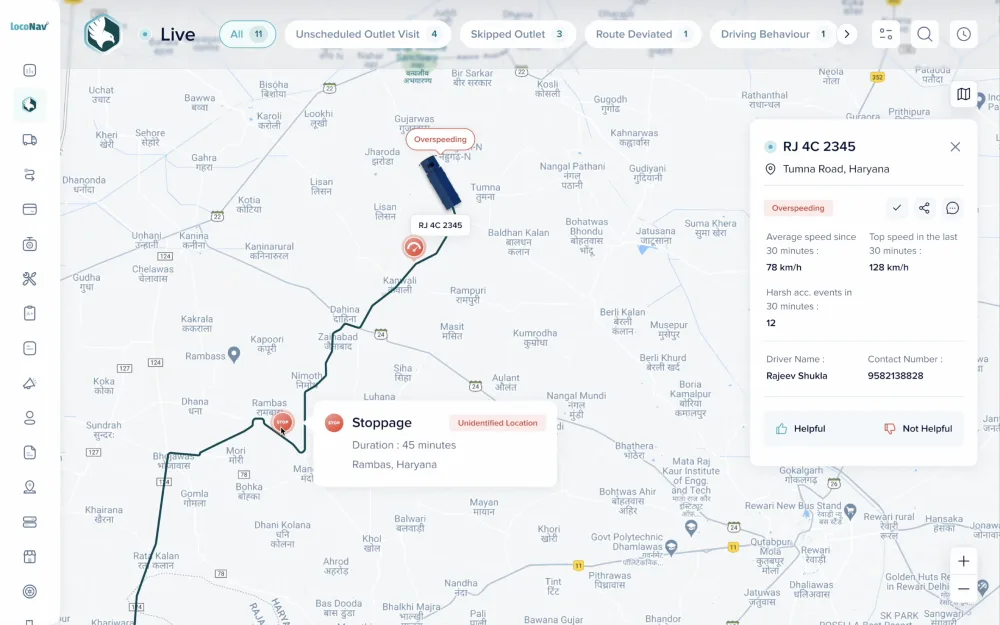
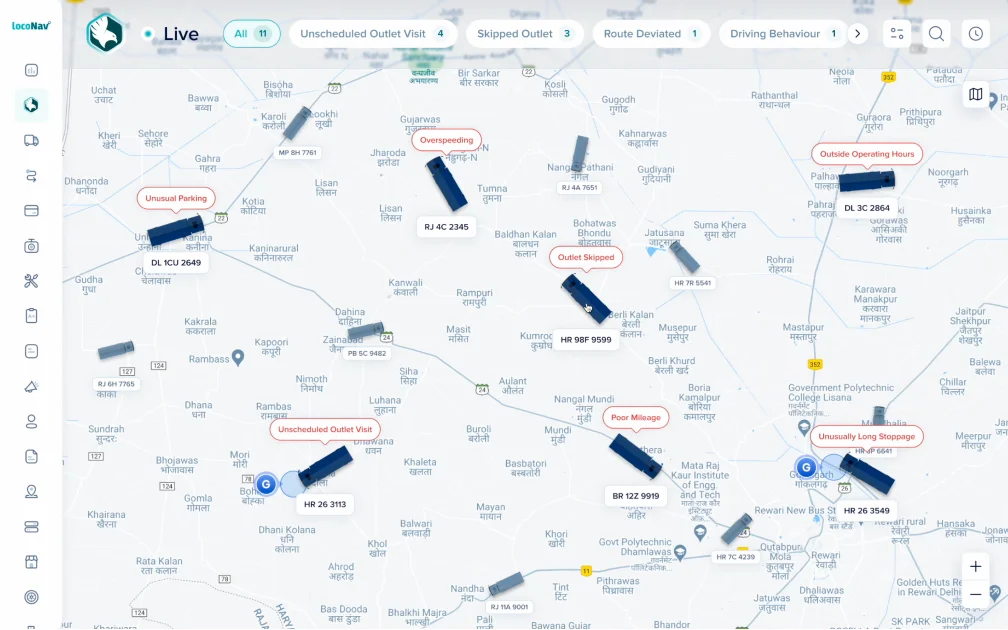
Once the overall experience and structure were finalized, I went deep on the details of each element. Getting the user's attention was necessary, we made deliberate efforts to direct it to the relevant information exactly when it mattered most. A clear indication of a definite problem needing prompt action is explicitly highlighted, so a user can delve deeper and fully understand the issue at hand.
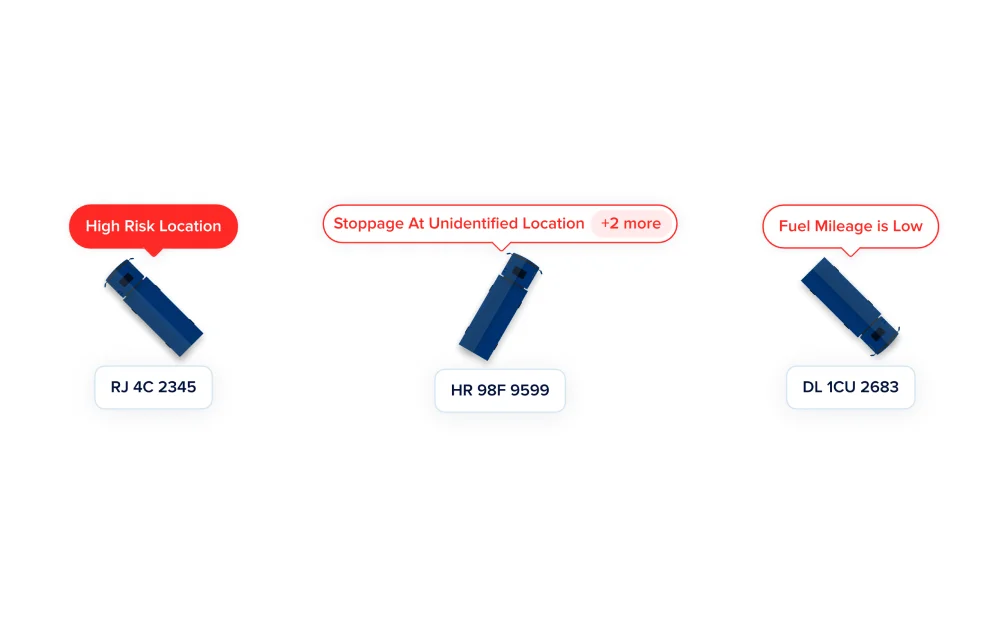
Visuals nuances
The details that calm the noise
A unique control-centre view, clean and visually calming, devoid of any distracting elements.
To enhance usability and relevance we integrated industry-specific icons, ensuring users receive actionable insights tailored to their respective industries.
We introduced a less-cluttered, cleaner map built on our brand guidelines.
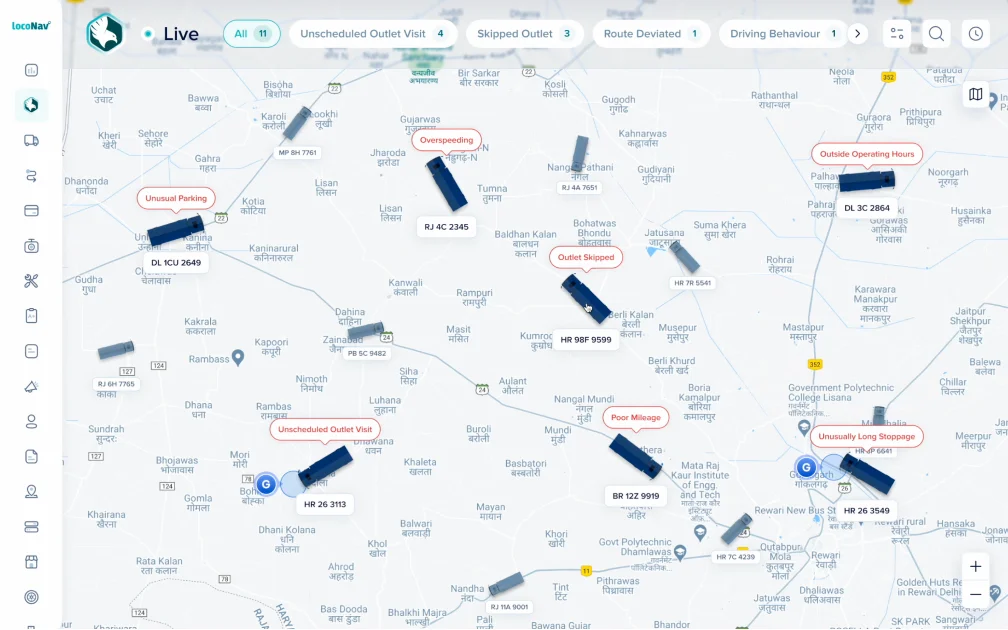
The designs
Simple, on purpose
The designs stayed deliberately simple, highlighting exactly what a user needs to act on, and surfacing suggestions to push task performance and precision further.
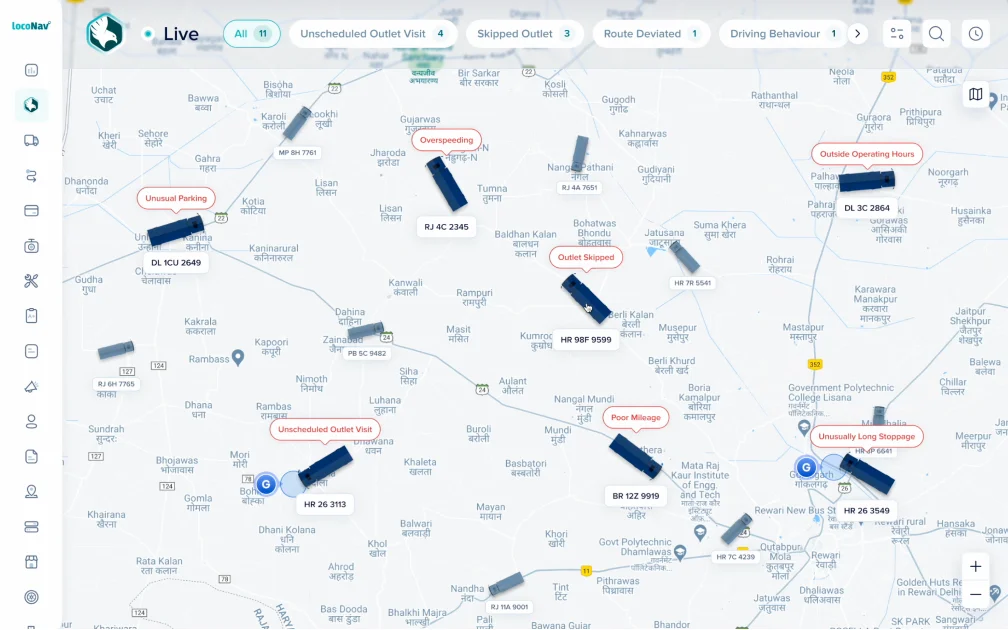
Suggestions
The platform suggests,
the user decides
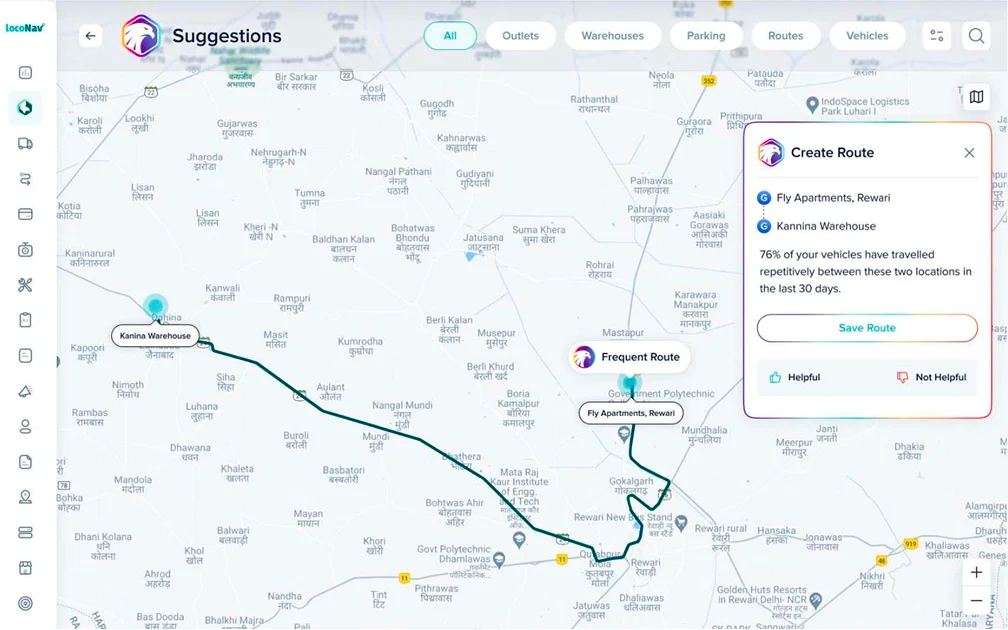
Eagle AI reads a fleet's own patterns and proposes helpful next steps, flagging vehicles that aren't in good shape so managers can focus on fixing them, and turning repeated journeys into saveable routes.
Using FMCG fleets as the worked example, the control center prompts things like "Is this your warehouse?", "Update parking" and "Save this frequent route", sharpening fleet security and organisation as it learns.
Prototype
See it in motion
Impact
What did we
achieve?
Spot · Stalk · Attach · Grab · Consume
That's how an eagle hunts, and how our AI layer works. (Kudos to the marketing team for the name.)
New revenue per vehicle / month for LocoNav
Total subscription per vehicle after Eagle AI, by region & fleet size
Projected share of LocoNav's total revenue by mid-2025
Eagle AI emerged as a pioneering AI-based solution in fleet management, a distinct, monetisable layer rather than another dashboard tab.
Future scope
Where it's headed
Deliver immediate, actionable insight the moment a user lands, once our databases are rich with industry-specific data on movement, stoppages, locations, routes and driver behaviour.
Take Eagle AI to market on its own, a layer that plugs into any fleet-management platform and delivers top-quality actionable insight, whatever you already run.